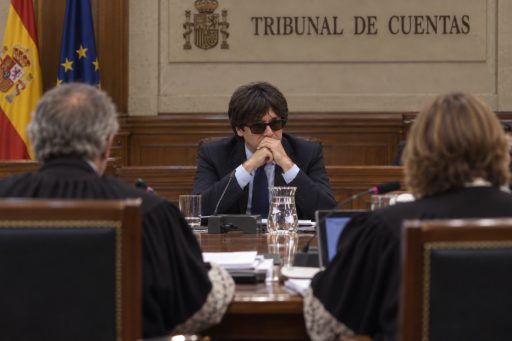
A Town Council receives a grant to build a municipal building. The works are certified as completed, although only part of them has been carried out, and no trace of the remaining funds can be found in the municipal accounts. The Administration that awarded the grant ends up demanding repayment of the difference. Years later, the Town Council itself brings proceedings before the Spanish Court of Auditors (“Tribunal de Cuentas”) against its former mayor to recover the loss and, once the preliminary proceedings have concluded, the provisional settlement record (“acta de liquidación provisional”) is drawn up. What happens from that point onwards?
Having analysed the preliminary proceedings in our previous publication, we now turn to the next phase: what happens from that record until the case is ready for judgment. In this phase, the alleged liable party finally has access to a genuine proceeding, with adversarial debate and evidence; although, as we shall see, their position is not particularly easy.
1. What changes after the provisional settlement record?
The record brings to an end the preliminary proceedings phase, which is preparatory and non-judicial in nature. The case file is passed to the Trial Section (“Sección de Enjuiciamiento”) and assigned to one of its Audit Councillors (“Consejeros de Cuentas”), who acts as the judicial body of first instance (art. 73.1 of Law 7/1988, of 5 April, on the Functioning of the Court of Auditors (hereinafter, “LFTCu”)). The proceedings follow the procedure of the declaratory action applicable according to the amount in dispute under Law 1/2000, of 7 January, on Civil Procedure (hereinafter, “LEC”), with the particularities established by the LFTCu itself (arts. 73.2 and 74 LFTCu).
Even before opening the trial, the Councillor may declare that there are no grounds to initiate it. This may be done if it is manifestly and unequivocally clear from the case file that there is no accounting liability, that jurisdiction is lacking or that the body lacks competence (art. 68.1 LFTCu in fine).
With regard to the provisional settlement record, it must be stressed that it is not binding on the trial body or on the parties: its amount, the persons it identifies as liable and its characterisation of the facts can (and should) be challenged.
2. How does the first instance unfold?
Economic Criminal Law and Criminal Compliance
Specialists in economic and corporate crimes. Criminal defence in complex cases and plans for the prevention of crimes and money laundering. We act before national and European courts with total rigour. Learn morea) Edicts and summons
On the working day following the assignment of the case, the Councillor orders the publication by edict of the facts that could give rise to accounting liability. Thus, those with standing to support or oppose the claim may appear in the proceedings within nine days. In the same decision, and within the same time limit, the Councillor summons the Public Prosecutor, the State Attorney (if the injured entity belongs to the State Administration), the injured entity and the alleged liable parties (arts. 68.1, 68.3 and 73.1 LFTCu).
The edicts are published on the Court’s notice board, in the Official State Gazette (“Boletín Oficial del Estado”) and in the provincial gazette and, if the facts concern an autonomous community or a local authority, also in the regional gazette (art. 68.2 LFTCu). Notwithstanding the above, the usual practice is for the parties, who have already appeared in the preliminary proceedings, to be notified so that they may appear in this phase.
This is the moment to appear and to gain access to the entire case file. Anyone who fails to do so within the time limit may appear later, but the proceedings will neither be set back nor suspended (art. 68.5 LFTCu). In practice, this means joining the proceedings at whatever stage they have reached, without recovering the steps that have already elapsed, with the serious consequences that this entails.
b) The statement of claim: no claim, no proceedings
The continuation of the proceedings depends on a statement of claim being filed, since accounting jurisdiction operates only at the request of a party[1].
Standing to file it lies with the injured Administration or entity and the Public Prosecutor (art. 55.1 LFTCu), as well as any person exercising the public action (art. 47.3 of Organic Law 2/1982, of 12 May, on the Court of Auditors (hereinafter, “LOTCu”)), provided they have appeared within the nine days granted by the edicts (art. 56.1 LFTCu).
Once the summons period has elapsed, the case file is forwarded to those who appeared as claimants so that they may file a statement of claim within twenty days. If the injured entity fails to do so, it is removed from the proceedings and the file is forwarded to the Public Prosecutor for the same period (if the injured entity belongs to the State Administration, the file will first be forwarded to the State Attorney). If the Prosecutor does not file a claim either, the case is dismissed and archived (arts. 73.3 and 73.4 LFTCu).
Nor is the statement of claim bound by the record: it may be directed against all those identified as liable in it, only against some of them, or even against third parties[2]. From that point, as explained above, the proceedings follow the procedure of the declaratory action applicable according to the amount in dispute (art. 73.2 LFTCu): the oral procedure (“juicio verbal”) if the shortfall does not exceed EUR 15,000, and the ordinary procedure (“juicio ordinario”) in all other cases (arts. 249.2 and 250.2 LEC). The amount is set by the Councillor after hearing the parties.
c) The defence to the claim
The defendant has twenty days to file a defence in ordinary proceedings and ten days in oral proceedings[3] (arts. 404.1 and 438.1 LEC). This is the key pleading in the proceedings, as it defines the terms of the dispute.
- Procedural objections and defences
Before arguing whether or not there was a shortfall, the defendant may raise objections. These are defences that do not deny the facts, but argue that, for some reason, the claim cannot succeed, and they must be raised in the defence: anything not argued at that stage can hardly be introduced later[4]. There are essentially three:
– Limitation is the first objection to be examined, and it must be raised in the defence to the claim. As a general rule, accounting liabilities become time-barred five years from the date on which the facts were committed. Where the liability is detected in the examination of accounts or in an audit procedure, or has been declared in a final judgment, the period is three years from the conclusion thereof, and if the facts constitute a criminal offence, they become time-barred in the same manner and within the same periods as the civil liabilities arising from them (paragraphs 1, 2 and 4 of the Third Additional Provision LFTCu).
In practice, this defence has limited scope, since any audit, disciplinary, judicial or other action aimed at examining the facts interrupts the limitation period (paragraph 3 of the same provision).
The period resumes if those actions are halted or end without a declaration of liability (paragraph 3 of the same provision). However, the interruption is not automatically effective against everyone. According to the Supreme Court, the act interrupting the period only has effect against the defendant if the defendant was aware of it, either through formal notification or because it is proven that they had actual knowledge of it (STS (Third Chamber) 437/2016, of 25 February). Reviewing the dates, and what can be proven that the defendant knew at each point in time, is therefore essential.
– Lack of standing to be sued may offer greater scope, since, as the Supreme Court has held, “only those who are managers of public funds may be subject to accounting liability, without prejudice to the special case of recipients of grants or other public sector aid” (STS of 17 April 2008, appeal 7452/2002).
– Inappropriateness of the procedure, where the conduct alleged is not a genuine shortfall but another accounting infringement. The Supreme Court has warned that, since the law distinguishes between the different types of accounting liability, undue payments cannot be “emptied” into the shortfall category (STS of 18 January 2012, appeal 11/2010). Despite this, as we noted in our previous publication, reimbursement proceedings for accounting shortfall continue to absorb a large proportion of accounting infringements.
- The merits
As to the merits, a finding of liability requires all the elements of accounting liability to be present (art. 49.1 LFTCu):
– An act or omission by a person handling public funds, in breach of budgetary or accounting regulations;
– an actual, economically quantifiable and individualised loss;
– wilful misconduct, fault or gross negligence; and
– a causal link between the conduct and the damage.
It is sufficient to rebut just one of them. That said, the defence usually focuses on justifying the use of the funds or proving the absence of gross fault. However, the latter route has its limits: lack of skill does not exempt from liability, and ignorance of the obligations inherent to one’s own position constitutes, in itself, gross negligence[5].
It should also be borne in mind that direct liability is joint and several (art. 38.3 LOTCu) and that payment of the amount of the shortfall before judgment leads to the discontinuance of the proceedings (art. 79.1.c) LFTCu).
d) Evidence and the burden of proof
Evidence is taken in accordance with the rules of the applicable declaratory action and, unlike in the preliminary proceedings, the defendant may propose any means of evidence admitted by the LEC, in particular expert accounting evidence, which is often decisive in reconstructing the use of the funds.
The central issue is the burden of proof. Accounting proceedings are governed by the civil-law principle on the allocation of the burden of proof. In other words, it is sufficient for the claimant to prove the delivery or outflow of the funds and the defendant’s status as manager; it is for the defendant to justify their use and, if they fail to do so, there is a shortfall, which the law defines as an unjustified debit balance or a lack of justification in the accounts (art. 72.1 LFTCu).
The Appeals Chamber (Sala de Justicia) of the Court of Auditors has stated this clearly: there is a shortfall not only when money is missing, but also when the person handling it “is unable to explain, with the minimum and indispensable evidentiary activity, the investment, destination or use made of them”[6]. Legal scholarship takes the same view[7], applying the rule of availability of evidence in Article 217.7 LEC[8]. In practice, the absence of supporting documentation amounts to a shortfall, which makes it necessary to reconstruct the documentation as soon as possible.
Once the evidence has been taken and closing submissions made, the case is ready for judgment.
3. Conclusion
Accounting proceedings finally allow the defendant to mount a defence, but their rules are not neutral: limitation is easily interrupted and the burden of justifying the funds falls on the manager.
That is why the defence is won or lost from the very outset: it is necessary to appear within the time limit following the edicts, to raise all objections in the defence (limitation, lack of standing and inappropriateness of the procedure) and to reconstruct, as soon as possible, the documentation justifying the use of the funds, because the main line of defence is documentary evidence.
At Ayuela Jiménez we have a team of lawyers specialising in Economic Criminal Law and in proceedings before the Court of Auditors, ready to design a specialised defence strategy from the very outset that makes the difference.
[1] José Francisco Fernández García, “La responsabilidad contable: el reintegro por alcance”, Revista de Administración Pública, No. 192 (2013): 362, https://www.cepc.gob.es/sites/default/files/2021-12/36851josefranciscofernandezgarciarap192.pdf.
[2] Fernández García, “La responsabilidad contable…”, 357.
[3] However, in at least one case the Court has granted twenty days to file a defence in a low-value matter that would ordinarily fall under the oral procedure. This occurred in reimbursement proceedings for accounting shortfall No. B-1013/2023, concerning a shortfall of EUR 3,500, in which the defendants were given that period to file their defence and to state whether a hearing should be held (Judgment of the Trial Section of the Court of Auditors 7/2024, of 4 November).
[4] Fernández García, “La responsabilidad contable…”, 367.
[5] Fernández García, “La responsabilidad contable”, 345.
[6] Order (Auto) of the Appeals Chamber of the Court of Auditors 24/2024, of 3 December.
[7] Miguel Ángel Torres Morato, “La responsabilidad contable”, Revista Española de Control Externo 25, No. 73 (2023): 13.
[8] Fernández García, “La responsabilidad contable”, 364–65, who cites it as art. 217.6 LEC, in accordance with its former numbering.
